


MANUAL WELDING
Facts on Welding Smoke and Fumes:
The following links provide further information on OSHA’s regulations

The American Welding Society also makes available important information regarding safety in welding, they have available for free download the standard Z49.1:2012 – Safety in Welding, Cutting, and Allied Processes; http://www.aws.org/safety/
In additional, recommendations are made by the ACGIH (American Conference of Governmental Industrial Hygienists);
Tables of Regulatory and Recommended exposure limits for substances are available here:
The American Welding Society also makes available important information regarding safety in welding, they have available for free download the standard Z49.1:2012 – Safety in Welding, Cutting, and Allied Processes; http://www.aws.org/safety/
How to Control Welding Smoke and Fumes:
The type of equipment that is appropriate for your process depends on how hazardous the fume is, and how large the weldments are, as well as other factors. Some factors to note:
Equipment to Control Robotic Welding Smoke and Fumes
Source Capture Equipment:
Overhead hoods:
FUME ARMS
 G110 with 6” x 10’ Fume Arm
 G120 with 8” x 10’ Fume Arm
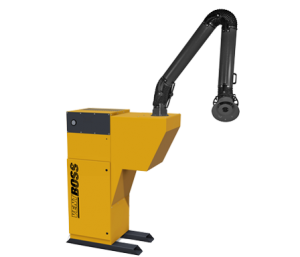 S311 with 8” x 10’ Fume Arm
 S313 with (2) 6” x 10’ Fume Arms
DOWN DRAFT TABLES & WORKSTATIONS
 S210 / S211 Down Draft Table
 S220 Cross Flow Table
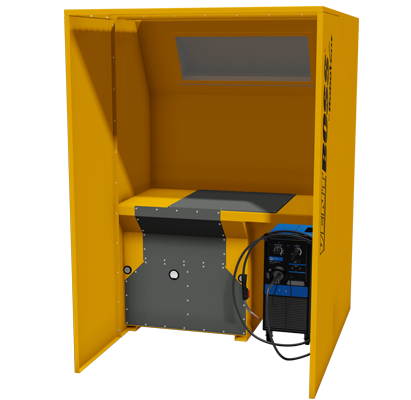 S230 Cross Flow Table